

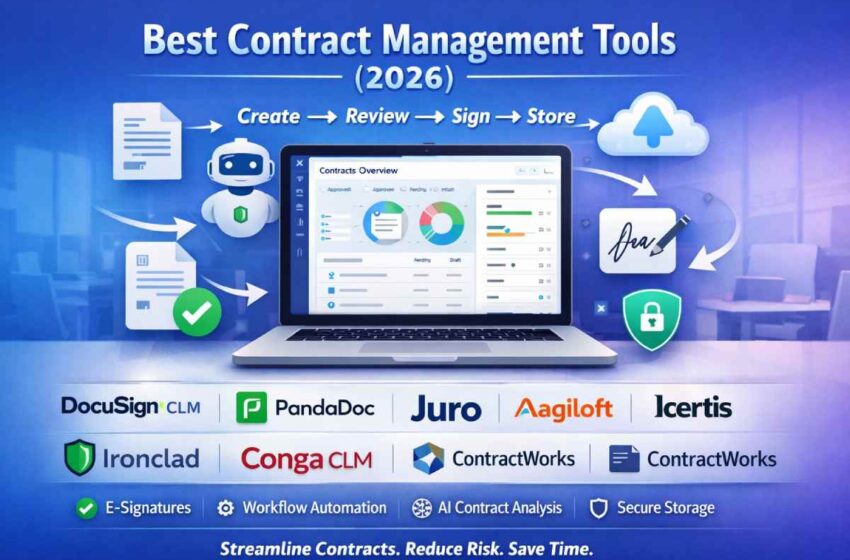
Best Contract Management Tools To Streamline Workflows And Reduce Risk
The contract starts in Sales.
Someone promises the client a quick turnaround. Legal gets tagged. Finance needs to confirm payment terms. Procurement wants to review the vendor clause. Suddenly the document is bouncing through inboxes like a pinball.
Attachment.
Revision.
Another attachment.
By the time the contract reaches version FINAL_v7_THISONEforREAL.docx, one question quietly appears in the Slack thread:
“Wait… which version are we signing?”
This moment happens in more companies than anyone likes to admit. Contracts aren’t just documents—they’re processes. And when those processes run through email and shared folders, chaos follows.
That’s exactly why businesses are searching for the best contract management tools. Not because contracts are glamorous. But because unmanaged contracts slow deals, increase risk, and frustrate everyone involved.
The Hidden Chaos of Manual Contracts
Let’s start with a quick reality check.
Most companies don’t manage contracts.
They store them.
Some live in Google Drive. Others hide in email threads. A few sit in folders someone created three years ago labeled Legal Stuff – Old. Technically the documents exist. Practically speaking? Good luck finding the right one quickly.
Manual contract systems create predictable problems:
- Contracts scattered across multiple locations
- Approval processes that stall without warning
- Confusion during negotiations about the “latest” version
- Missed renewal deadlines or compliance obligations
In short: contracts become harder to track as businesses grow.
The best contract management tools solve this by turning contracts into structured workflows instead of static files.
Table of Contents
Centralized Contracts: The “Find It in Two Seconds” Upgrade
Here’s a radical idea.
What if every contract lived in one place?
Not inboxes. Not desktops. One centralized system where agreements are stored, searchable, and organized.
This is the foundation of modern contract management tools.
With a centralized repository, teams can instantly locate contracts, review negotiation history, and track document versions. No more scavenger hunts through shared drives.
Which means fewer Slack messages starting with:
“Does anyone have the signed version?”
Workflows That Actually Move Contracts Forward
Contracts rarely involve just one department.
Sales negotiates. Legal reviews. Finance checks pricing. Procurement evaluates vendors. Leadership occasionally appears with a late-stage question.
Without structure, these approvals move unpredictably—sometimes quickly, sometimes not at all.
The best contract management tools automate these workflows.
Contracts move automatically from one reviewer to the next. Stakeholders receive notifications when their input is required. Approvals happen inside a structured system rather than floating through email.
Short version: fewer bottlenecks.
Longer version: significantly faster deal cycles.
Templates: The Quiet Hero of Contract Efficiency
Here’s a slightly uncomfortable truth.
Many contracts look almost identical.
NDAs follow similar structures. Vendor agreements repeat familiar clauses. Sales contracts often rely on standard language.
Yet companies still draft agreements from scratch—or copy outdated documents that may or may not contain the correct legal terms.
Templates change the equation.
Contract management platforms include approved templates and clause libraries that allow teams to generate agreements quickly while maintaining compliance with legal standards.
Legal teams maintain control.
Other departments move faster.
Everybody breathes easier.
Version Control: Ending the “Final_v6” Era
Negotiations create document chaos.
One party edits a clause. Another suggests changes. Someone downloads the contract and sends it back with new comments. Before long, five different versions exist.
And no one is quite sure which one is correct.
The best contract management tools eliminate this problem through built-in version tracking.
Every edit is recorded. Every revision is visible. Teams can compare document changes in real time and ensure that everyone works from the latest version.
No guessing. No accidental approvals of outdated contracts.
Just clarity.
Risk Reduction Through Better Visibility
Contracts contain more than legal language.
They hold operational details—renewal deadlines, payment schedules, performance obligations, compliance requirements. When these details remain buried inside PDFs, businesses lose visibility into their own agreements.
Contract management tools transform contracts into structured data.
Teams can track deadlines, receive alerts about upcoming renewals, and monitor obligations across their entire contract portfolio.
This visibility helps companies reduce risk before problems appear.
Which is always preferable to fixing issues afterward.
Choosing the Right Contract Platform
Not every organization needs the same contract management system. But the best contract management tools usually share a few common strengths:
- Centralized contract storage
- Automated workflows for approvals
- Template and clause libraries
- Version control for negotiations
- Analytics and contract data tracking
Platforms that combine these features allow businesses to treat contracts as operational assets rather than administrative paperwork.
Solutions like best contract management tools highlighted by Ironclad show how modern platforms can streamline contract workflows while giving teams greater control over risk and compliance.
Final Thought: Contracts Shouldn’t Feel Like Chaos
Contracts govern nearly every business relationship—customers, vendors, partnerships, employees.
They’re too important to manage through scattered documents and endless email threads.
The best contract management tools replace that chaos with structure. Centralized documents. Automated workflows. Clear visibility into every agreement.
And perhaps most importantly…
No more files named FINAL_v8_THISoneREALLYfinal.pdf.